Headline consumer price growth jumped by the most since June 2022 in the United States last month while measures of underlying pressure remained tame, underscoring the challenge facing the Federal Reserve as it struggles to balance labour market vulnerabilities against war- and tariff-related inflation risks. According to data published by the Bureau of Labor Statistics this morning, the all-items consumer price index rose 0.9 percent in March from the prior month, and 3.3 percent over the same period last year. This matched consensus estimates among economists polled by the major data providers ahead of the release, with a 20.2-percent jump in gasoline costs—the biggest since 1967—doing the bulk of the heavy lifting.
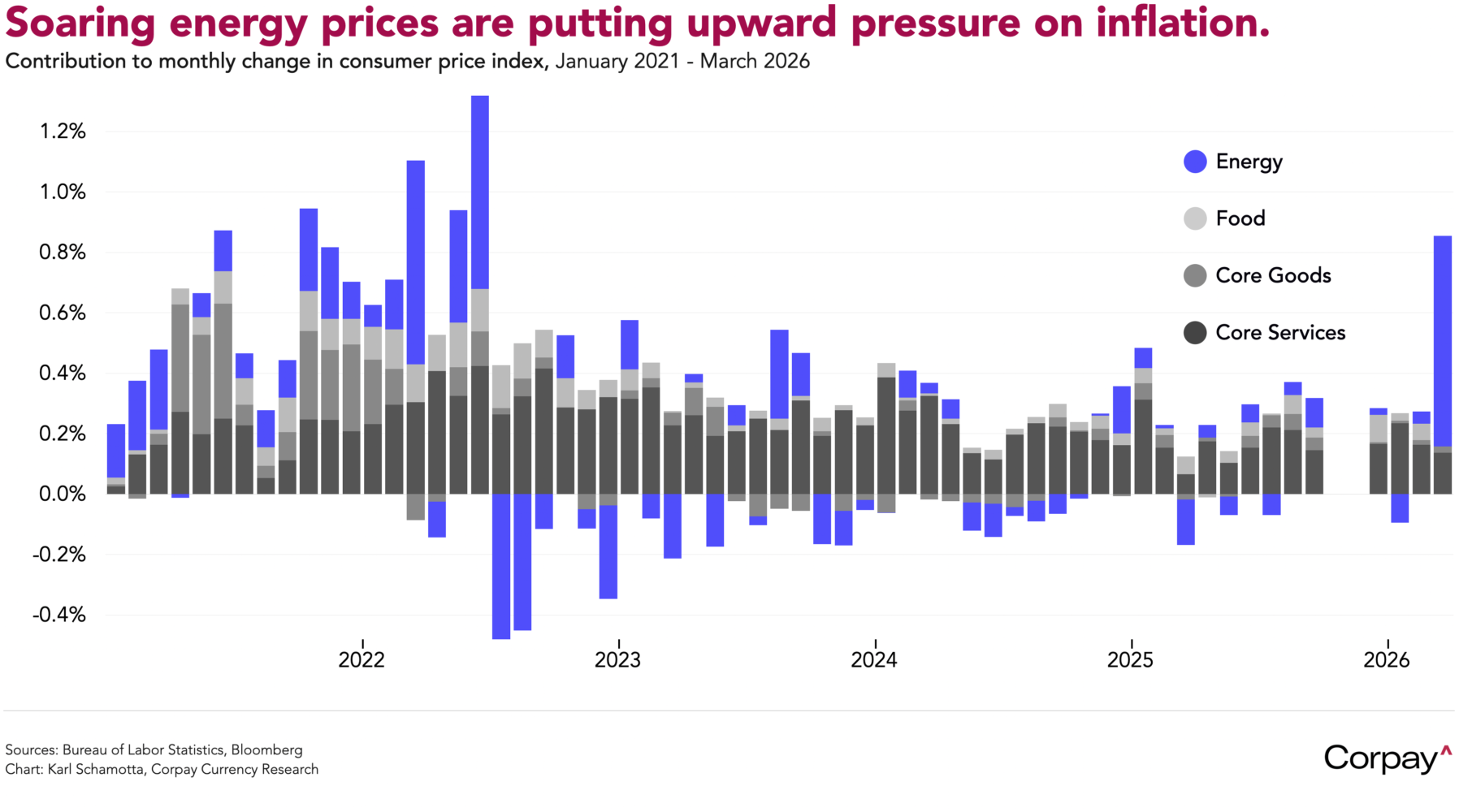
Underlying core inflation—excluding volatile food and energy prices—was more subdued, helping reduce the likelihood of a sharp policy pivot, rising 0.2 percent for a second month and climbing 2.6 percent from a year prior. Yesterday’s personal consumption expenditures data told a similar story: core price growth remained above the Fed’s target before the war began, but real incomes and consumer spending softened, undermining the case for rate hikes in the near term.
Treasury yields are edging down on the policy-sensitive front end of the curve, equity futures are climbing, and the dollar is retreating against its major rivals as traders react to an on-consensus print and focus on underlying price pressures.
Uncertainty over the Middle East ceasefire remains the dominant force in markets, with many investors remaining optimistic ahead of this weekend’s negotiations in Islamabad. The US and Iran appear to have paused direct military strikes, but Israel’s assault on Tehran’s proxy allies in Lebanon is still underway, and shipping through the Strait of Hormuz remains at a standstill. It is unclear whether Iranian officials will attend the talks, given their consistent insistence that Lebanon be included in any cessation of hostilities.
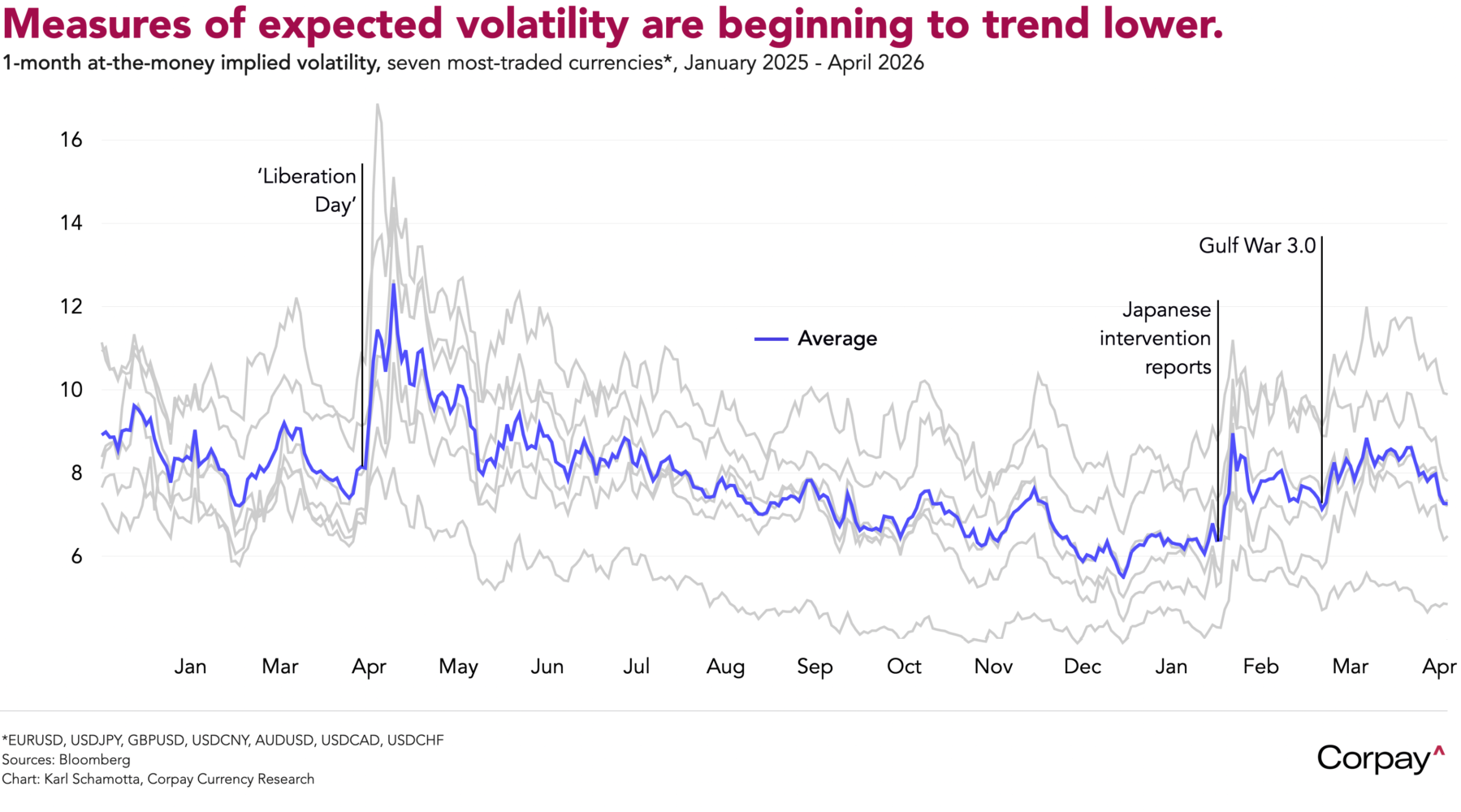
After performing well through the early part of the week, energy-importing currencies are showing signs of exhaustion, with the euro, British pound, and Japanese yen holding just above key technical levels as traders avoid placing large directional bets. This backdrop sets risk-sensitive currencies up for some appreciation at the Sunday open if a resolution is reached in Pakistan, and should also help to keep measures of implied volatility on a downward trend—assuming that the current occupant of the White House avoids further escalation.
Here in Canada, the economy generated slightly fewer jobs than anticipated last month, failing to offset last month’s unusually-large drop. According to an update just published by Statistics Canada, 14,100 new positions were added in March and the unemployment rate held at 6.7 percent. Consensus estimates had pointed to 15,000 new hires, with the jobless rate seen stabilising. 1,100 positions were lost in full time work, while part-time rose by 15,200, and the average hourly wage for permanent employees—closely watched by monetary policymakers—rose 5.1 percent from a year earlier, marking a 19-month high.
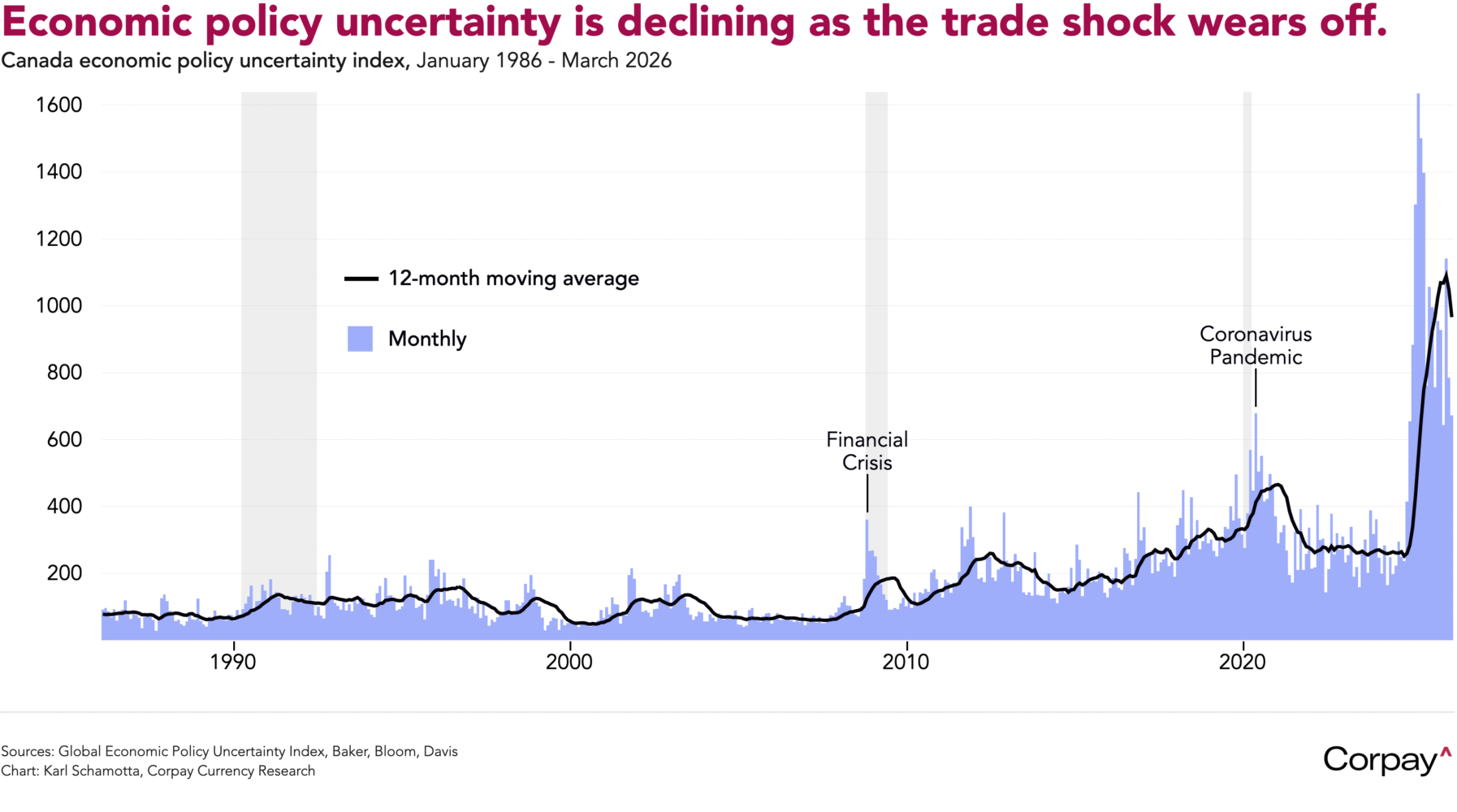
The loonie is climbing on a narrowing in expected policy differentials. Economic policy uncertainty is beginning to ease, even as anecdotal evidence suggests businesses remain reluctant to hire as the impact of last year’s US tariff shock and an ongoing housing market correction reverberate through the economy. The gap between Canadian and US unemployment rates—which often anticipates longer-term valuation shifts in the dollar-Canada exchange rate—has narrowed to 2.4 percentage points from 2.8 in August, suggesting the loonie may be slightly undervalued at current levels.